I am so glad I took the opportunity to go to more art museums this time around, because I captured some pretty incredible stuff.
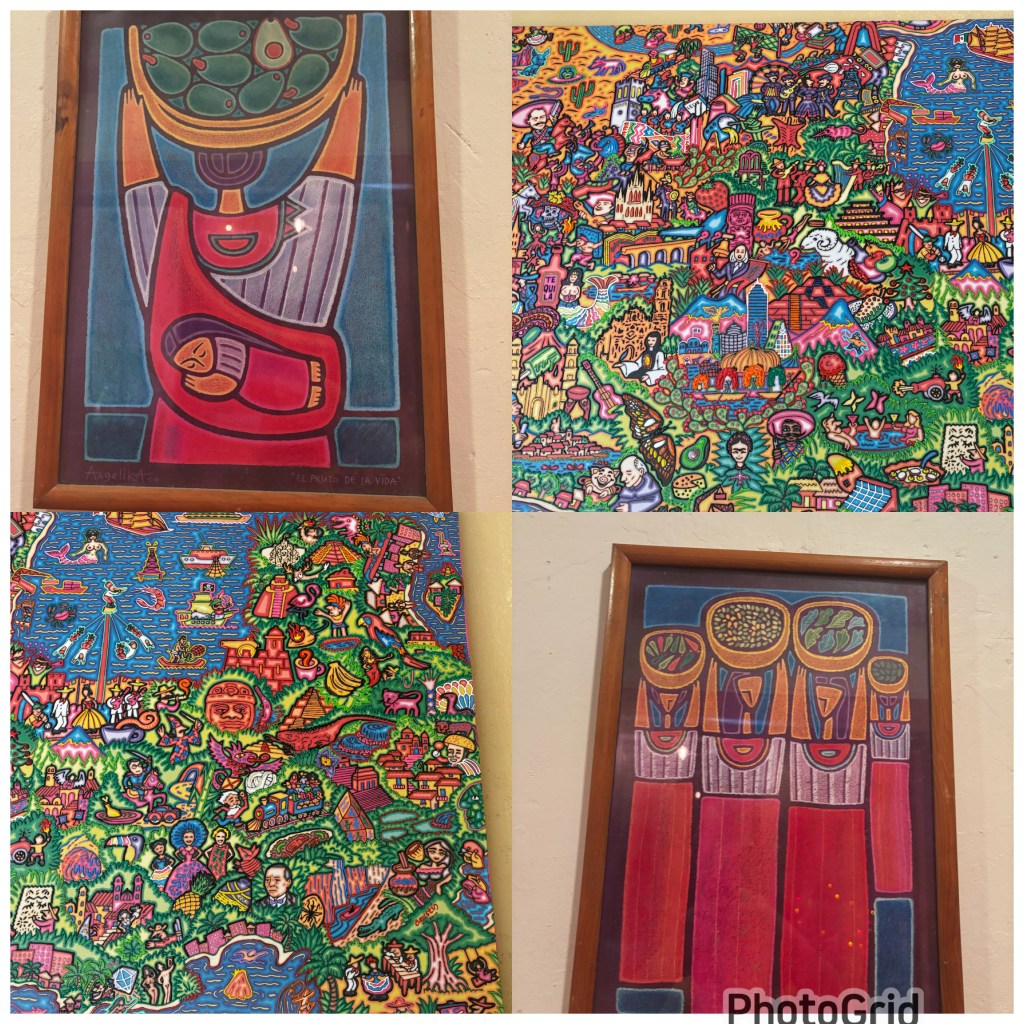
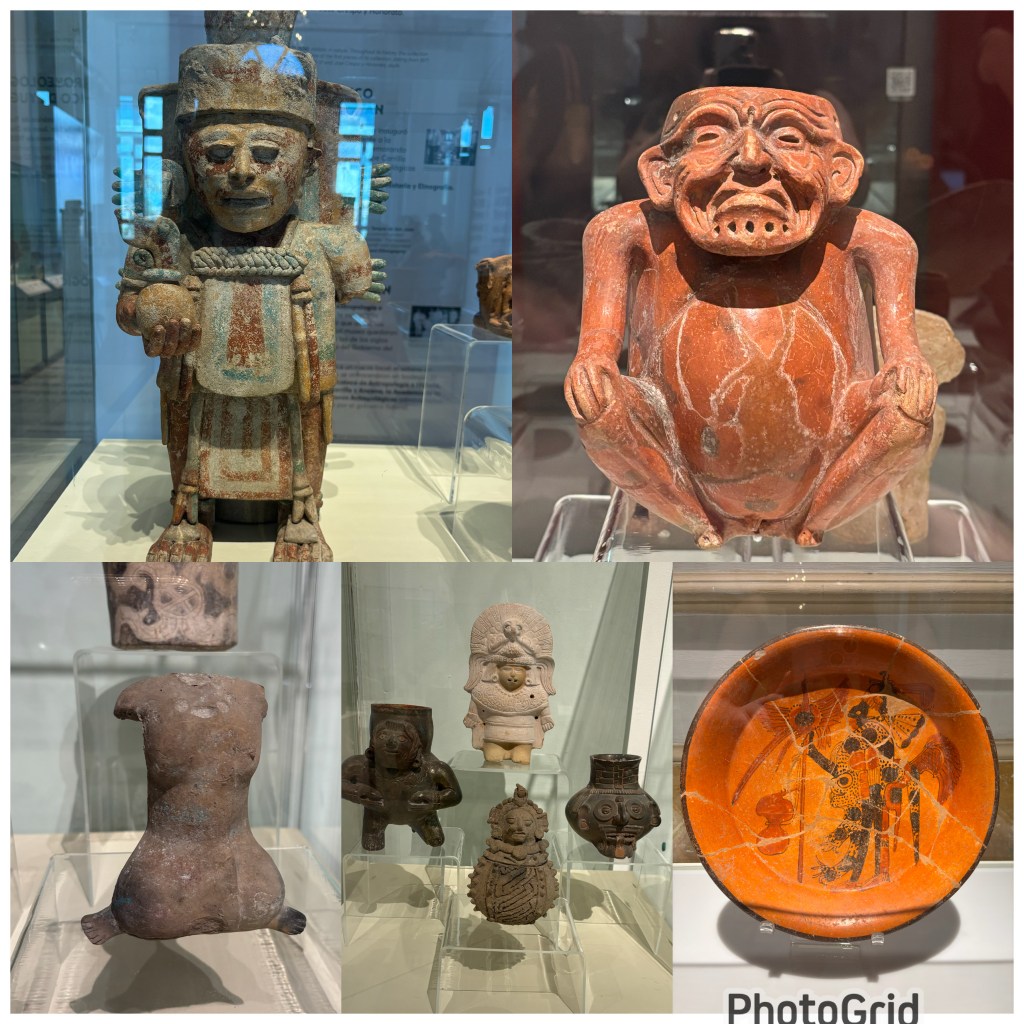
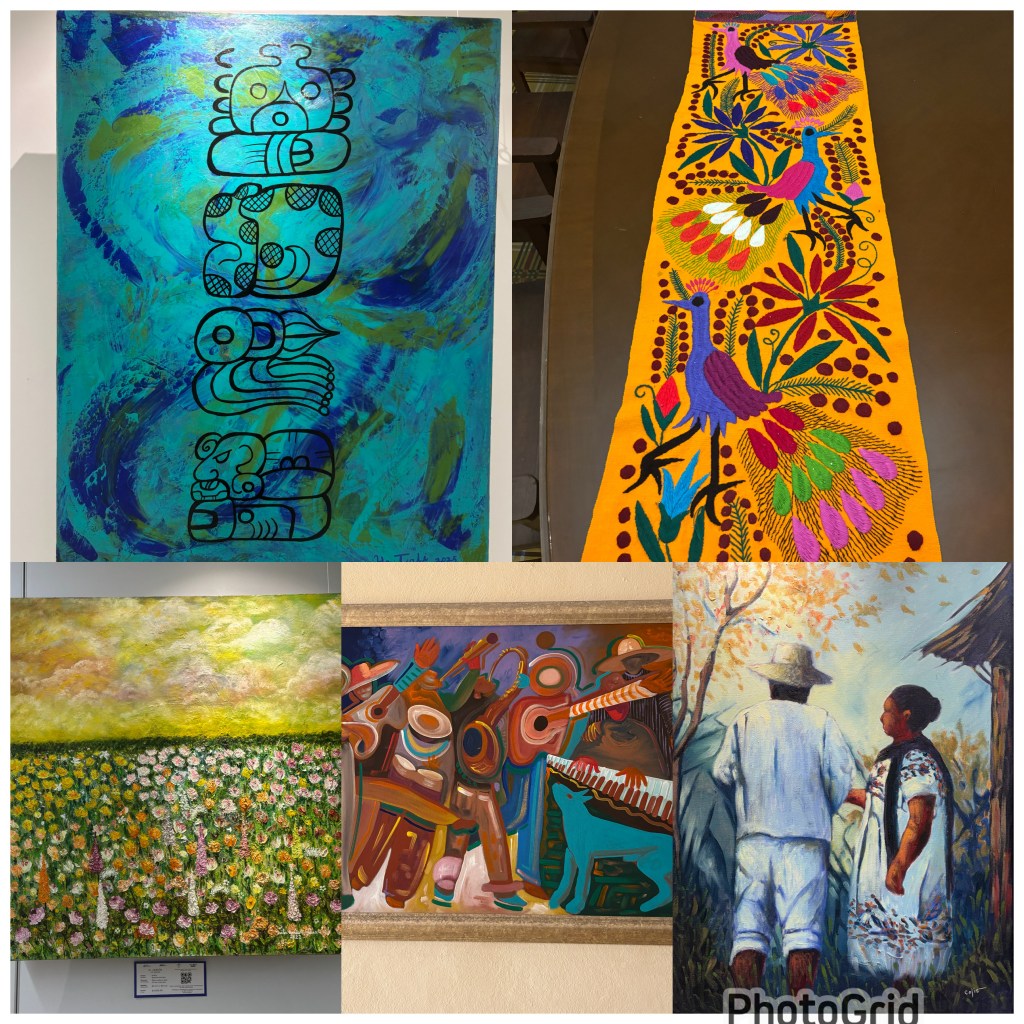
There are so many colorful, vibrant, and breathtaking murals in Merida. The one diagonal of each is a huge, sprawling mural that details various artistic, culinary, and scientific achievements of famous people throughout Mexico. You can clearly see the Olmec influence in the bottom left-hand corner, with the statue depicting the flourishing culture in Veracruz from 1500 B.C. to 400 B.C. The other art shown here is of a mother and a daughter, and women carrying baskets, both of which highlight the matriarchal roots of Mesoamerica. Fun fact: my mom chose “Luna” as my name because of an ancestral legacy that saw the moon as a source of female strength and empowerment. These are all from the Museum of Anthropology. It’s incredible to me how old this artwork is, ranging from 1,000 to 2,000 years old. It’s incredible to me both how long it has been physically preserved, and how it was able to survive the brutality of Spanish colonization. The upper right piece is a representation of Itazmná, made between the years 600-800 A.D. The bottom left is a female figure dated to 600-800 A.D. as well. The figurines are also from that time period. If I’m not mistaken, the upper left statue is much older, closer to around the time of Christ’s birth. The bottom right is from a little bit later in time, around 1,000-1,300 A.D. (so around medieval times for Europe). It’s a plate meant to represent the intricacies of war. While this art is nowhere near as ancient as the following pieces, these are still absolutely breathtaking. You can find many of these in the Merida airport, but the upper right is traditional Maya embroidery found around town. Fun fact: when describing the people and culture, you always say “Maya.” It’s only for the language that you say “Mayan.”
 LunaSol: Art, Food, & Nature From Around the World!